Connect(X) 2026 made one thing clear: the telecom infrastructure industry is moving beyond AI experimentation and focusing on operational execution.
Across conversations with tower owners, carriers, engineering firms, infrastructure operators, and technology providers, the discussion was no longer centered on whether AI belongs in telecom workflows. The conversation has shifted to where it creates measurable operational value and how teams can apply it without introducing additional risk, rework, or complexity.
This year at Connect(X), the Inorsa team participated across the event through our booth presence, customer meetings, speaking sessions, executive discussions, and industry events. The conversations consistently pointed back to the same challenge:
How do telecom infrastructure teams move faster without sacrificing accuracy?
That question showed up repeatedly in discussions around deployment workflows, engineering throughput, permitting delays, structural analysis, asset management, and long-term infrastructure operations.
Connect(X) 2026: The Industry Is Focused on Execution
Connect(X) remains one of the largest gatherings of telecom infrastructure leaders in the U.S., bringing together tower companies, carriers, fiber operators, engineering firms, technology providers, and infrastructure investors.
For Inorsa, the event focused on:
- Meeting with infrastructure operators and deployment teams
- Discussing operational bottlenecks across deployment workflows
- Sharing how AI is being applied in real-world telecom operations
- Participating in industry conversations around automation, validation, and infrastructure data
One theme surfaced repeatedly throughout the event:
Wireless deployment does not usually break at engineering itself. It breaks in the inputs.
Teams are still managing fragmented information across RFDS packages, lease agreements, structural analysis, construction drawings, permitting documentation, and operational systems. When those inputs do not align, issues surface late, revision cycles increase, and deployment timelines slow down.
That operational reality became a central theme across multiple sessions and private discussions throughout Connect(X).
From Chaos to Clarity: Spotlight Session Highlights
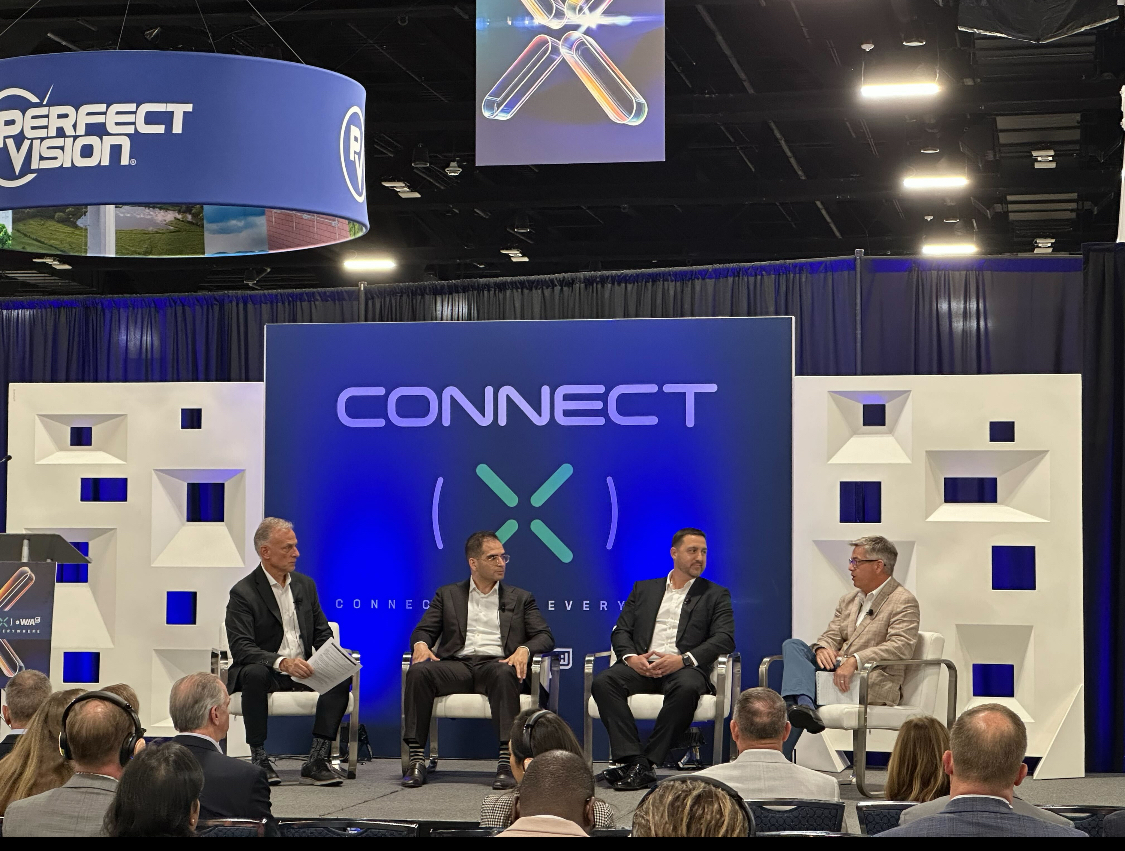 At the Connect(X) Spotlight Stage, Inorsa hosted a session titled:
The discussion featured:
- Sean Shahini, CEO & Co-founder of Inorsa
- D.J. Grosso, SVP of Operations and Administration at Harmoni Towers
- Nat Mangum, CEO of Selective Site Consultants
- Moderated by Tom Marciano, Head of Growth Strategy at Inorsa
The session focused on where deployment workflows actually break down and how operators and engineering teams are using AI to improve execution across active deployment programs.
Several themes stood out.
Manual Reconciliation Is Still Slowing Deployment
One of the clearest points raised during the session was how much time teams still spend simply reconciling information before engineering work can begin.
Deployment workflows often require teams to compare and validate:
- RFDS packages
- Lease agreements
- Structural analysis
- Existing construction drawings
- Permitting documentation
That work is frequently manual and spread across multiple teams and systems.
As Nat Mangum explained during the session, engineering firms are still spending significant time validating incoming information before work can move forward. In many cases, the challenge is not engineering complexity itself. It is ensuring the underlying information is aligned and trusted before execution begins.
The panel repeatedly returned to the same operational principle:
“Speed without accuracy just creates more rework.”
That idea became one of the defining themes of the week.
AI Conversations Have Matured
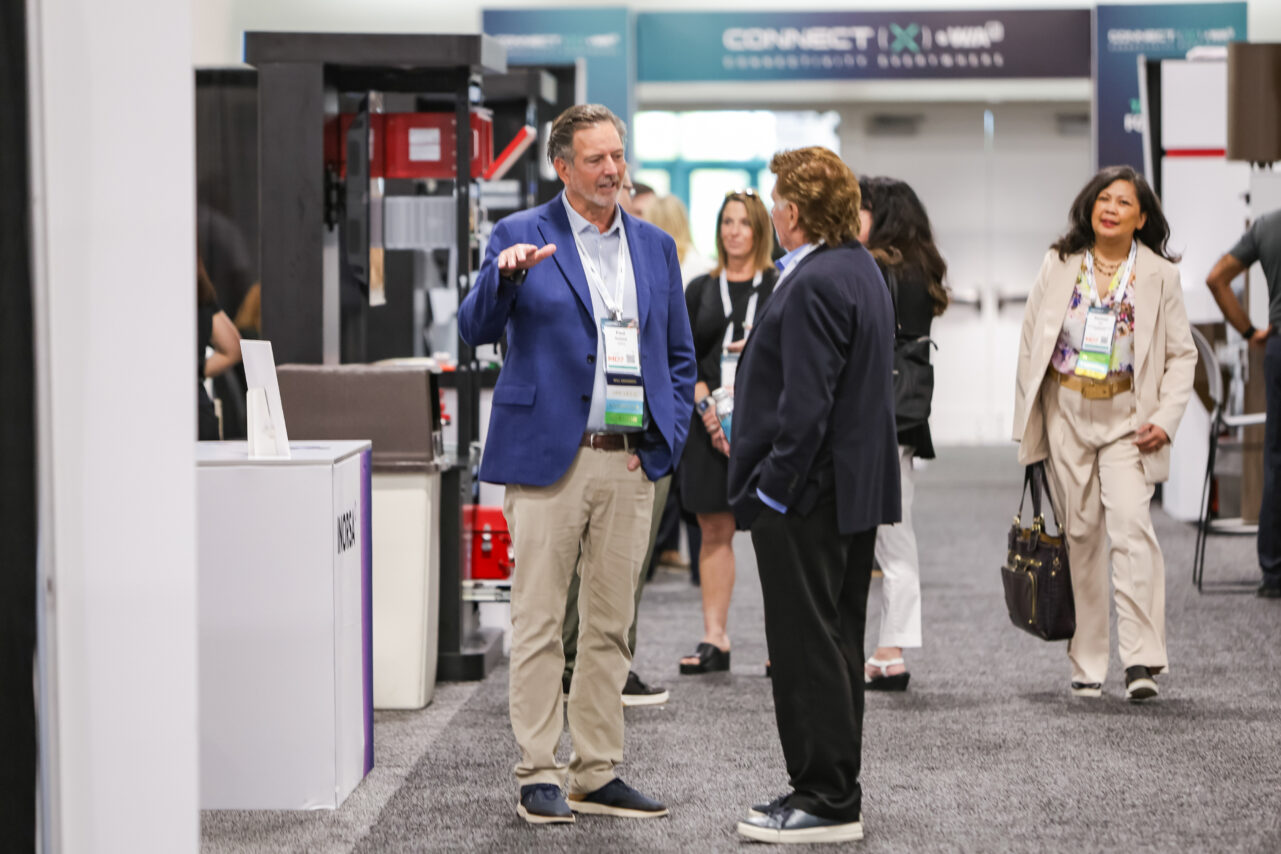
One of the biggest shifts at this year’s event was the maturity of the AI conversation itself.
The industry discussion is no longer centered on generic AI hype or broad automation promises. Operators and infrastructure teams are increasingly focused on practical workflow improvements tied to measurable operational outcomes.
Throughout the event, speakers discussed how AI is being applied to:
- Extract information from fragmented documents
- Validate conflicting infrastructure data
- Reduce manual review
- Improve coordination between teams
- Accelerate deployment timelines
- Improve forecasting and operational planning
Importantly, nearly every panel also acknowledged the same limitation:
AI only works when the underlying data is accurate and trusted.
During the digital twins panel discussion, several speakers emphasized that the real value is not the visualization itself. The value comes from having trusted information that teams can use to make faster and more reliable decisions.
As Sean Shahini noted during the panel:
“You can’t optimize what you can’t trust.”
That idea surfaced repeatedly across conversations around digital twins, AI, deployment automation, and infrastructure management.
Digital Twins Are Evolving Beyond Visualization
Another major takeaway from Connect(X) was that the concept of digital twins is evolving quickly.
The conversation is shifting away from treating digital twins as static 3D models or visualization tools alone. Increasingly, operators are viewing them as operational systems that help teams:
- Validate infrastructure conditions
- Simulate deployment scenarios
- Improve engineering coordination
- Reduce uncertainty
- Accelerate decision-making
Several panelists emphasized that the real operational value comes from combining:
- trusted infrastructure data
- real-world asset conditions
- workflow integration
- AI-assisted decision-making
David Pash of SiteSee described this shift by explaining that the value of a digital twin is not the model itself, but “the ability to use the truth to start progressing decisions quicker.”
That framing reflected a broader industry trend visible throughout the event:
The telecom industry is moving from digitization toward operational monetization.
Operational Excellence Is Becoming a Competitive Advantage
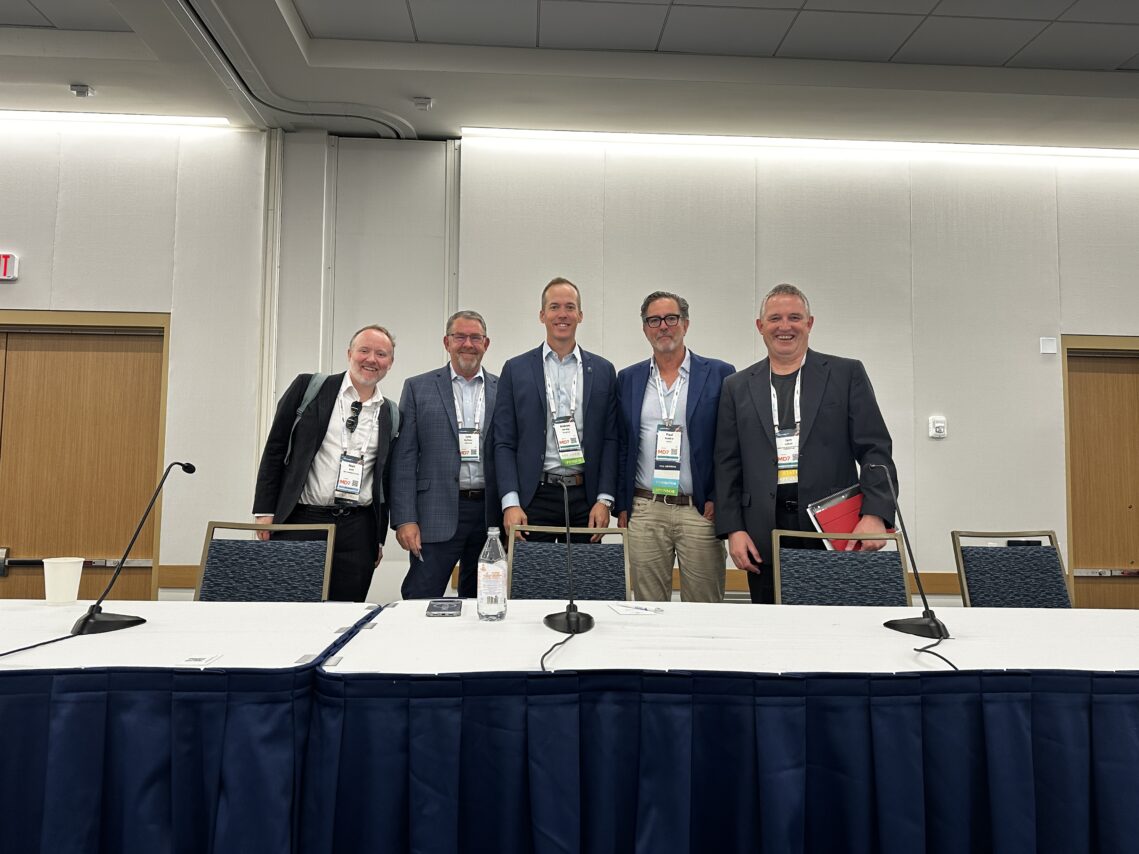
On Wednesday, Paul Reddick joined the WIA panel discussion:
“Driving Operational Excellence in Telecom Infrastructure: From Visibility to Performance.”
The panel included leaders from SBA Communications, Fullerton, OneVizion, and Inorsa, and focused on how infrastructure organizations are improving visibility, coordination, and operational performance across increasingly complex deployment environments.
One of the clearest takeaways from the discussion was that operational efficiency is no longer just about project management visibility. It is increasingly tied to the quality and usability of infrastructure data itself.
Panelists discussed how organizations are using automation and AI to:
- Improve forecasting
- Reduce truck rolls
- Validate infrastructure records
- Coordinate deployment workflows
- Reduce delays tied to inconsistent information
- Improve first-time-right execution
Paul Reddick summarized the issue clearly during the session:
“An intelligent asset is one where the data drives execution, not just reporting.”
That distinction matters.
The industry is moving away from treating infrastructure data as static documentation and toward using validated data as an operational system that supports deployment, engineering, permitting, and long-term asset management.
AI Adoption Still Requires Human Expertise
Another important theme throughout Connect(X) was realism.
Multiple speakers acknowledged that AI still requires human oversight, especially in edge cases, engineering judgment, permitting interpretation, and operational decision-making.
Rather than replacing expertise, many organizations are using AI to reduce repetitive manual work so experienced teams can focus on more complex operational challenges.
Several panelists also discussed how quickly workflows are changing and how organizations are beginning to adapt operationally and culturally.
As Sean Shahini stated during the digital twins panel:
“Every single one of us are not going to have the same jobs in two years.”
The broader point was not about replacing teams. It was about recognizing that infrastructure workflows are evolving quickly and organizations need to adapt alongside the technology.
Looking Ahead
Connect(X) 2026 showed that the telecom infrastructure industry is entering a more operational phase of AI adoption.
The conversation is becoming less about experimentation and more about:
- Deployment speed
- Data accuracy
- Workflow coordination
- Operational efficiency
- Reducing rework
- Improving execution across infrastructure programs
As deployment complexity continues to increase, the pressure on infrastructure teams will continue to grow as well.
The organizations that succeed will likely be the ones that can move faster while maintaining confidence in the underlying data driving their workflows.
As several speakers emphasized throughout the event, the opportunity is no longer just digitization.
The real opportunity is turning trusted infrastructure data into faster execution, better operational decisions, and measurable business outcomes.
That was one of the clearest messages from this year’s Connect(X).
And it is a conversation the industry is only beginning to accelerate.
At a Glance
At Connect(X) 2026, one theme surfaced repeatedly across telecom infrastructure conversations: deployment delays are still being driven by fragmented data, manual review, and disconnected workflows.
From digital twins and AI to validation and operational execution, industry leaders discussed how infrastructure teams are moving beyond experimentation and applying AI to real deployment challenges. Topics included reducing rework, validating infrastructure data earlier, improving engineering workflows, accelerating permitting, and creating more trusted operational systems across towers, fiber, and wireless deployments.
The event highlighted a broader shift happening across the industry: AI adoption is becoming less about hype and more about execution, data quality, and measurable operational outcomes.
Powerful Automation, Endless Possibilities.
Become an early adopter today and enjoy VIP benefits and opportunities to contribute to our advisory community!